
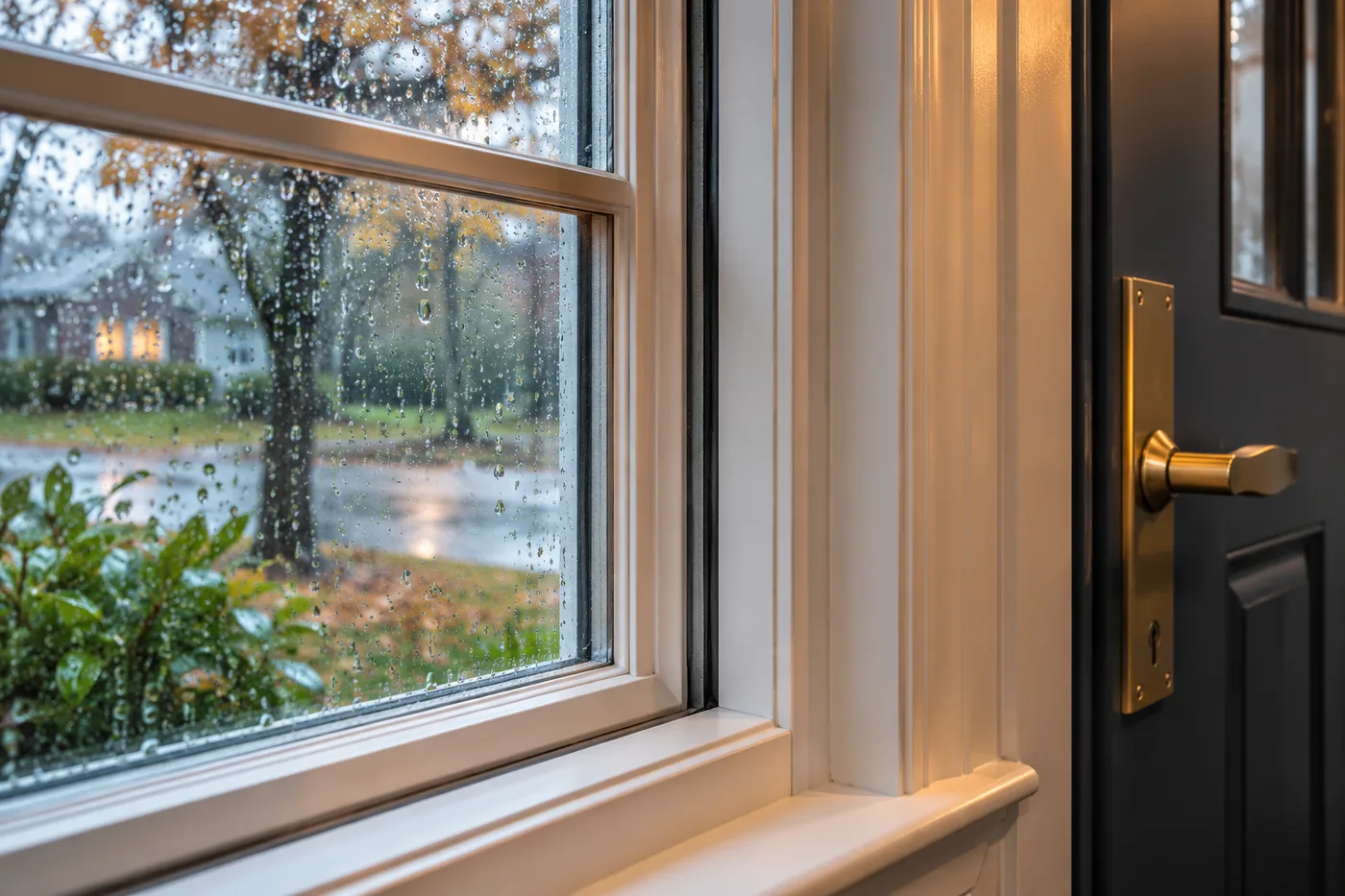
In one season, the door closes with an easy click. In another, you have to pull it toward you before the bolt turns. That is a useful observation, even when the cause is not yet clear.
Some openings respond to changes in temperature or moisture. Others have worn hardware, alignment issues or weather stripping that affects the fit. Living in the South Sound does not diagnose the fault.
Notice the ordinary movement
Say whether the door reaches the frame, whether the latch engages and whether the key then turns. Mention a difference between normal use with the door open and with it closed. Do not force a key or keep slamming an opening to prove that it can be locked.
Schlage's manufacturer guidance describes alignment, hinge and weather-strip considerations. Those are possibilities to assess at the actual opening, not a universal instruction to replace a cylinder or alter a frame.
Remember recent changes
New weather stripping, paint, a different key or a changed handle can all be relevant details to mention. A photograph of visible hardware may help identify the product, but it does not replace inspection of the whole opening.
If you call about lock repair, describe the symptom first. An assessor can then explain what appears to be involved and which further checks are needed before proposing the work.
Keep access and repair separate
A lock whose keys are unaccounted for can need a change of key arrangement even if it works smoothly. A door that catches can need assessment even if every key is present. These are separate reasons to arrange help.
Our rekeying page explains the first decision. At a managed or rented property, check who authorizes the work on the particular opening and any shared access system.
Check the finished opening normally
After the agreed work, close and use the door as you ordinarily would. The result should not depend on an unusual lift, pull or slam during the demonstration. Ask which fault was addressed and whether a separate issue remains.
For an exposed entrance around Day Island, follow the actual product's care guidance rather than a generic coastal treatment. Call 253-948-9592 with the door and observed change when discussing a University Place request.
Useful questions
Does a seasonal symptom mean the lock is damaged?
Not necessarily. The opening, alignment, weather stripping and mechanism may need consideration together.
Should I use more force on a sticking key?
Do not force a key or use repeated hard closing to overcome a fault. Describe the symptom and arrange an appropriate assessment.